

Domestic Anthropology & Burnt Toast
Why how we move is key to good interior design

What is Domestic Anthropology? It’s the study of human behaviours and how our cultures, traditions and societal changes have affected how we use our homes. I’m fascinated by people, particularly how individuals and families interact, move around one another and within their four walls. Anyone else?
Everything I’ve learned about people’s habits, pathways and needs in the home environment has been banked and informs all of my design. As the world evolves those needs change too and the world has moved on a great deal since 2020, so much so that it seems like everyone is extending, redecorating or remodelling to accommodate this societal shift. My latest project, The Wheatlands Project was all about improving flow and creating a better connection for this young, busy family.


I’ve always viewed the home as a living entity, another family member; they age and change just like as we do. This anthropological interest in our domestic spaces helps me to focus on providing alternative and creative design solutions. I’m not interested in putting things where they’ve always been, because… “well that’s where the laundry rooms goes isn’t it?” Actually, if it works better to have the laundry room on the same floor as the bedrooms, and you have space for it, then let’s plan it there. For the way we live now it can make total sense, because we don’t have a washboard and mangle by the back door anymore.

The crux of good interior design hinges on clever spatial planning. It’s one of my favourite aspects of any project – really analysing spaces, what you want but more-so, what you need that space to do.
Solving problems in your home at the floor plan stage is key to a successful finished design and one of the reasons I don’t get involved in projects post build. Every set of architects plans I’ve seen over the past decade, have been tweaked, altered or completely re-drawn. If you’ve already finished your build, chances are there’s little I can do to make much difference, because for me, the fundamental success of a design comes from how well the space is planned. A new rug and wall colour isn’t going to change the fact that your main pathway between the kitchen and the living room means you have to walk past the TV. Cue your family shouting at each other Every. Single. Day.
“We were doing a renovation & had lots of ideas, but it’s di&cult to know what will & won’t work. Karen helped us with a practical & realistic view of the architects plans. Yes – the architect needed to go back to the drawing board – and yes every day we are pleased we gave her the plans to look at!”
Are you an architect?
Nope. I have literally no formal qualifications in architecture or design.
Well how do you know this stuff then – where did you learn it?
My understanding of space wasn't learned from textbooks. It’s been honed over a lifetime of observing how people move, how buildings shape our behaviour and evoke emotion. Over many years and several different projects, this instinctive ability has been tested, refined and strengthened through experience. After some proper soul searching and introspection (my favourite kind of ‘spection) I think these are some of the skills and personal qualities that enable me to do what I do.
Reason No. 1 – My professional training and previous career in dance.
It has given me excellent spatial and kinaesthetic awareness, a deep understanding of how we as human beings move and the ability to visualise in 3D.
“Spatial visualisation is the ability to manipulate mentally two and three dimensional “figures”
Which translated means I’m able to look at a 2D floor plan and put myself in a 3D version, walk around and live in that space. I can mentally position furniture from my “mind palace”, walk around them, add a window or change the wall colour for example. I always assumed everyone could do this, but apparently it’s around 30% of people. This ability to visualise spaces in three dimensions allows me to imagine possibilities that aren’t always obvious on a floor plan.
Reason No. 2 – I admit to having a low tolerance to pain, discomfort, annoyance or being out of balance (physically, mentally, emotionally). I’m a Libran if you’re interested. My parents always referred to me as being highly sensitive, but I prefer the term “Super Senser” because it makes me sound like a super hero with a cool cape. This super sense, empathy, emotional intelligence, whatever you want to call it, it allows me to get under the skin of my clients and decipher what they want, even when they’re not necessarily able to articulate it.
My gut is extremely vocal, acting as the mouthpiece for my mind, when it’s not happy or sure with something in a design, it makes itself known. Basically, if something isn’t right, then neither am I. And then there’s my dreams. I’ve solved some real interiors dilemmas when i’m asleep – my subconscious can be very loud if I’ve ignored it during waking hours.

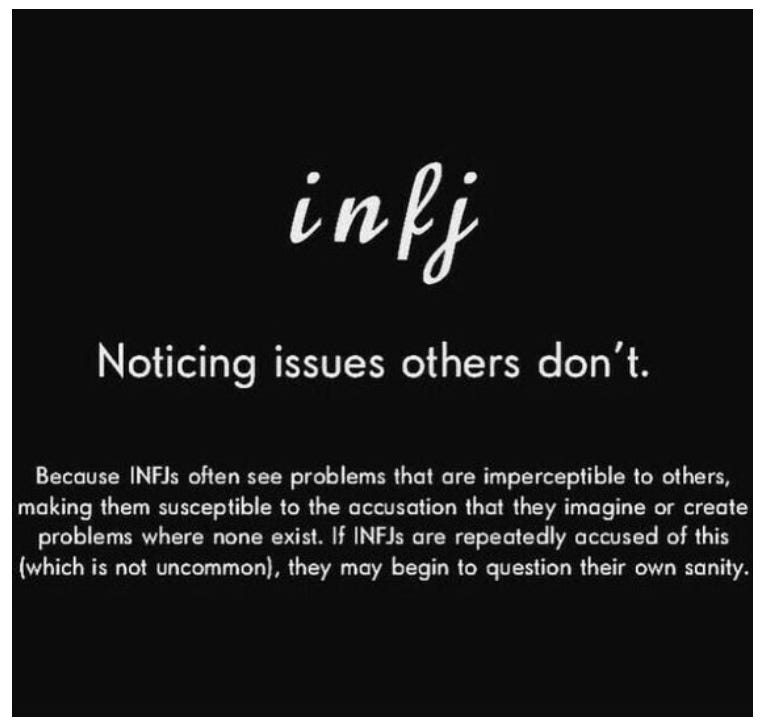
Reason No. 3 – Being self employed, like forever, I have worked from home all my adult life so I’ve spent more time in the home environment than anywhere else. During which I’ve constantly noted aspects within my own four walls that have frustrated me or affected my level of happiness. I’m sure it’s no surprise to read that i’m an introvert; INFJ for those who are familiar with Myers Briggs. We are apparently a bit of a rarity making up 1% of the population. Referred to as the “true introverts” it means I am no happier than when I am queen of my own (preferably empty) little castle.
“An Advocate (INFJ) is someone with the Introverted, Intuitive, Feeling, and Judging personality traits. They tend to approach life with deep thoughtfulness and imagination.” 16 Personalities
Any other INFJ’s out there?
Reason No. 4 – I’m one of those creative types and get a real kick out of solving problems, preferably in a lateral way so the solution is unique or unexpected. Having something that’s just a little bit different, unique to you, feels really special. And who doesn’t want to feel special?
“Karen has been an inspiration to work with from our very first virtual meeting. From the initial concept, all the way through to scheduling of works, her dedication and attention to detail has been exemplary. A last minute paint colour change after a sleepless night (Sleep Solving) is an indication of the personal care and thought Karen puts into her creations. She has an uncanny ability to help you explore and develop your own taste and style, which for me has proved to be quite an enlightening journey. Karen took my ramblings and vague brief and developed them into an exquisite design, and I now I have a room that almost feels like it gives me a hug every time I walk in.” M. Owen - Coach House Project
The key to finding the right answers to your interiors conundrum is asking the right questions. My role is to put myself in your shoes and live your day to day life on the floor plans. And because i’m able to visualise in three dimensions, I start by mentally acting out basic tasks within those plans, such as:
Making a brew (the fridge is 7 metres away from the kettle)
Putting a wash on (the laundry bins are two floors away from the washing machine)
Getting home (there is nowhere to pop your keys, bag or hang your coat)
Feeding the cat (there’s constantly a pile of shoes by the cat food bowl)
None of these situations sound utterly dreadful (first world problems) but man, they’re annoying and could be easily solved. However, if you don’t, over time your body and nervous system makes unconscious adjustments to compensate. These small, seemingly insignificant changes to our natural behaviour at home can become a real bug bear – you might not know why you’re annoyed with your house, your partner, your kids, your poor cat, or even yourself… but you are.
“We initially approached Karen looking for advice regarding a new kitchen to go within a proposed 2-storey extension to our house. We took along our architect’s drawings. Immediately Karen could see several areas within the drawings which didn’t make sense, didn’t make best use of the available space and which would cause great frustration to us living there. We agreed to leave the drawings with her to try and work out a better layout. What she came back with blew our minds. Karen managed to put herself inside the drawing and walk around visualising all aspects, creating the best use of the space. She asked the right questions to get to know what would work best for us and our family. She then talked us through her proposed layout in such a clear, logical manner that it was easy for my husband and I to visualise it too. We are so, so glad we approached Karen before any building work had started! Karen has likely saved us from a completely inappropriate and frustrating extension.”
I remember looking at these plans and I was like what the flip is going on here? What is that bit there? Why is that there? Are they happy to walk through two sets of doors and across a side entrance (where there will be shoes everywhere) to get a tin of beans from their pantry to retrace their steps back over shoe mountain to find out you’ve only gone and burnt your toast it took so long? I very much think not.

This comes back to the ability to 3D visualise living in that space. I lived their life in that architect’s plan, my ‘Super Sense’ kicked in and I was bloody miserable and angry. I’d shouted at my kids for leaving their shoes in a place where it’s totally acceptable to leave shoes, and I’d moaned at my husband for agreeing to put the pantry there. Because we all project and transfer our frustrations onto others don’t we? Or maybe that’s just me.
“We initially met on a colour consult for the hallway and after a cuppa and me moaning about our kitchen, she persuaded me the way to go was to put off the decorating and knock down a wall in the kitchen instead! This was a bit of a shock but after some discussions we went for it and the end result is amazing. The space has been totally transformed and it makes a difference to our family every single day.”
Have you ever had a large box or something sat in your hallway for a week or two? At first, you might accidentally walk into it, catch it with your knee. The next time (your bruised knee as a reminder), you notice it being in the way and consciously avoid it by adjusting your pathway. Then over the next 24-48 hours, because our brains are amazing and adjust to our surroundings quickly, we pass the box safely without even thinking. We just get used to it being there – it’s still in the way but we adapt. The following week it’s gone and it’s only then do we realise just how annoying having that box there was and how much better the space feels without it. Now, imagine having a home where every space just feels better; all of those unconscious negative feelings and behaviours are gone.

So is my house making me angry?
Maybe. We all certainly have aspects of our living environment that provoke negative feelings. There are still things about my own house that I’d like to improve for sure. I think a lot of us get stuck living in layouts and room sizes that once suited a previous generation, a property developer (don’t get me started on new builds) meaning we compromise our own modern day lifestyles.
If you are planning building work, an extension or re-model, this is your chance to remove any annoying pathways, patterns or hardwired habits.
What would make your home environment better, what would make your life easier and improve your wellbeing? Just please don’t fall into the trap of thinking a bigger house will be a better house. A badly planned space is not solved by making it bigger, you may just end up with a bigger badly planned space (and bigger mortgage).